





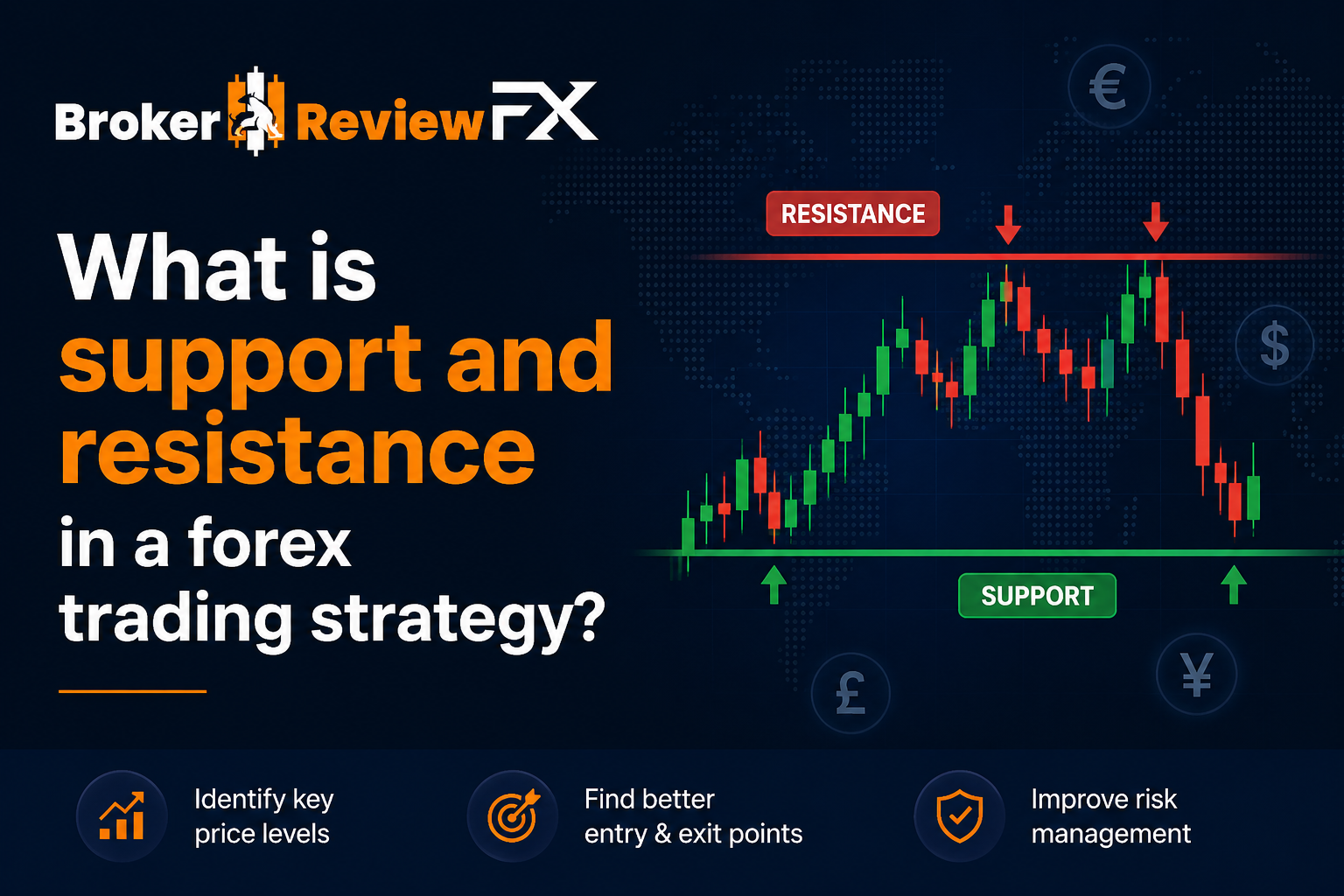
In simple terms support is an area where a falling price tends to slow or reverse because buyers enter the market. Resistance on the other hand, is a level where a rising price often struggles to move higher as sellers become more active.
These levels are created by market participants including retail traders, banks hedge funds and institutional investors. Since price movements are heavily influenced by buying and selling decisions support and resistance naturally form as key areas where market sentiment shifts.
Traders use support and resistance to:-
- Identify potential entry and exit points.
- Understand market trends and structure.
- Set stop-loss and take-profit levels.
- Improve overall risk management.
Ultimately these levels help traders determine where the price is most likely to react next.
What Is Support in Forex Trading?
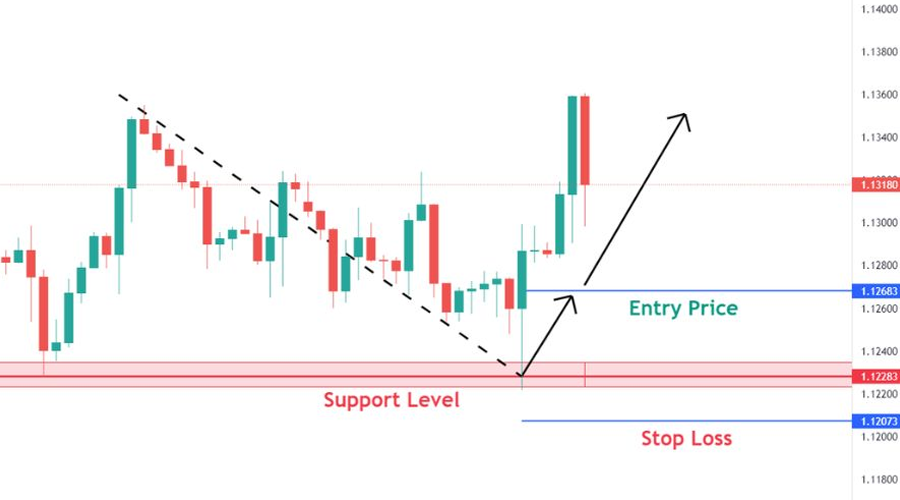
Support is a price area where a currency pair tends to find buying interest after a decline. When the market reaches this zone buyers often step in creating enough demand to slow down or reverse the downward movement.
Rather than being a precise line support is usually considered a zone where price has reacted multiple times in the past. The more often a support area holds the more significant it becomes.
Support develops because traders and investors remember previous price reactions. Some traders see the level as a buying opportunity while others use it to close short positions or protect profits.
Types of Support Levels
Horizontal Support
Horizontal support forms when price repeatedly finds buyers around the same level. Because these areas are easy to spot on a chart they often attract significant market attention and can become strong support zones.
Trendline Support
In an uptrend the price often creates a series of higher lows. By connecting these lows traders can draw a trendline that acts as support. This type of support helps traders follow the prevailing trend.
Dynamic Support
Certain indicators such as the 50-period or 200-period Exponential Moving Average (EMA), can act as dynamic support. Unlike horizontal levels these support zones move with price and are commonly used in trending markets.
What Is Resistance in Forex Trading?
Resistance is a price area where buying momentum begins to weaken and selling pressure increases. As the market approaches this level sellers often enter positions making it difficult for the price to continue rising.
Like support, resistance is usually a zone rather than a single price level. It reflects areas where traders believe the market has become relatively expensive.
Resistance often forms when traders who bought at lower prices take profits while others use the level as an opportunity to open sell positions.
Types of Resistance Levels
Horizontal Resistance
Horizontal resistance occurs when the price repeatedly struggles to move above a specific level. These areas often coincide with previous market highs and frequently attract selling activity.
Trendline Resistance
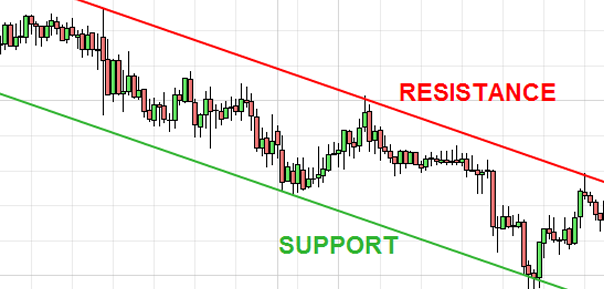
In a downtrend lower highs can be connected using a descending trendline. This trendline acts as resistance helping traders identify areas where sellers continue to control the market.
Dynamic Resistance
Moving averages and other technical indicators can also serve as dynamic resistance. These levels adjust as the market moves and are commonly used by traders who prefer adaptive rather than fixed price zones.
Why Support and Resistance Matter
Support and resistance levels provide valuable insight into market behavior. They highlight areas where buyers and sellers have previously influenced price direction helping traders anticipate future market reactions.
One of the biggest advantages of using these levels is that they provide structure. Instead of entering trades randomly traders can plan entries and exits around clearly defined zones.
These levels are also useful for risk management. Many traders place stop-loss orders beyond support or resistance areas to protect themselves if the market moves against their position.
In addition a strong break above resistance or below support can indicate a shift in market sentiment and potentially signal the beginning of a new trend.
Support vs Resistance: Understanding the Difference
Support and resistance serve opposite purposes but both are equally important.
Support is an area where buyers are stronger than sellers which may prevent prices from falling further. Resistance is an area where sellers are stronger than buyers which may limit upward movement.
Together they form the foundation of market structure and help traders understand whether the market is trending consolidating or preparing for a reversal.
The Role of Support and Resistance in Chart Patterns
Many popular chart patterns are built around support and resistance levels. These zones create the boundaries within which prices move and help traders identify potential trading opportunities.
Patterns such as double tops and double bottoms are formed when the price repeatedly reacts to the same resistance or support level. Similarly the head-and-shoulders pattern relies on a key support area known as the neckline.
Continuation patterns such as triangles flags and rectangles also form around support and resistance zones. When the price eventually breaks beyond these boundaries traders often view it as confirmation that momentum is building in a particular direction.
Using support and resistance alongside chart patterns can improve trade accuracy and reduce the likelihood of acting on false signals.
Popular Support and Resistance Trading Strategies
Support and resistance are not trading strategies in and of themselves. Instead, they provide a framework for traders to build effective trading approaches.
Bounce Trading Strategy
The bounce strategy involves entering a trade when the price reacts positively to a well-established support or resistance level.
Traders often look for confirmation through candlestick chart patterns rejection wicks or other signs that the level is holding before entering a position.
This approach tends to work best in ranging markets or during steady trends where support and resistance remain respected.
Breakout Trading Strategy
A breakout strategy focuses on trading when the price successfully moves beyond a significant support or resistance level.
To avoid false breakouts traders often wait for additional confirmation such as strong momentum increased trading volume or a retest of the broken level.
Successful breakouts can lead to strong market moves and offer attractive trading opportunities.
Role Reversal Strategy
One of the most reliable concepts in technical analysis is role reversal.
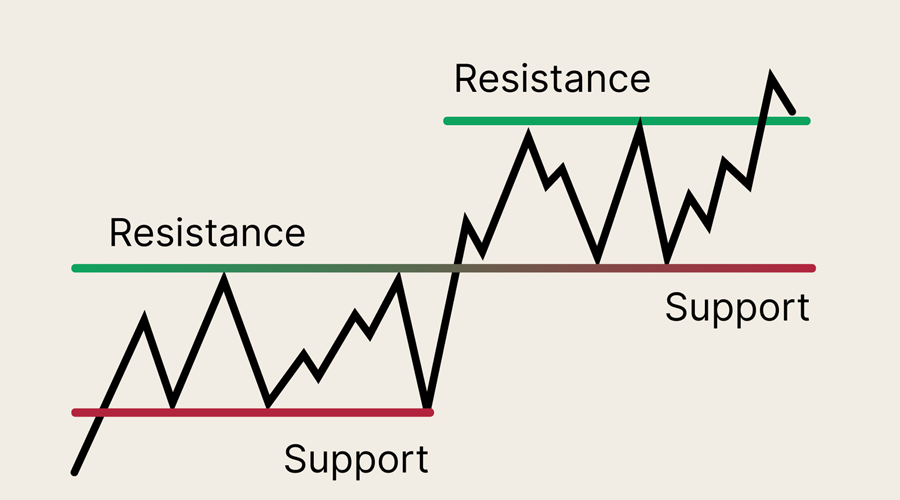
When resistance is broken it often becomes support. Likewise, broken support can become new resistance. Traders frequently use these transitions to identify continuation opportunities and improve trade timing.
What Happens When Support or Resistance Breaks?
A break above resistance usually indicates increasing buying strength and suggests that buyers have gained control of the market.
A break below support signals growing selling pressure and may indicate the start of further downside movement.
After a breakout the market often revisits the broken level. This retest helps traders determine whether the breakout is genuine. If the price successfully holds above the former resistance or below the former support confidence in the new trend typically increases.
However traders should remain cautious because not all breakouts lead to sustained moves. False breakouts occur when the price briefly moves beyond a level before quickly returning to its previous range. Waiting for confirmation can help reduce the risk of entering trades too early.
Final Thoughts
Support and resistance are essential building blocks of Forex trading. They provide valuable insight into market psychology help define market structure and allow traders to make more informed decisions.
Learning how to identify and use these levels effectively takes time and practice but the effort is worthwhile. When combined with trend analysis, price action and proper risk management support and resistance can become powerful tools for improving trading performance.
Every successful trader develops a strong understanding of these concepts because they reveal where buyers and sellers are most likely to make their next move.